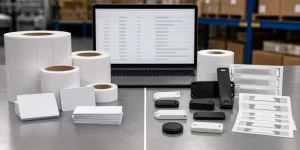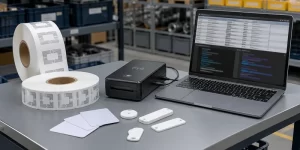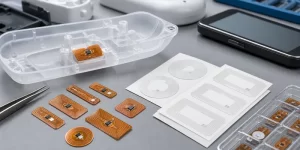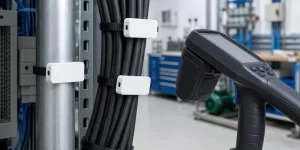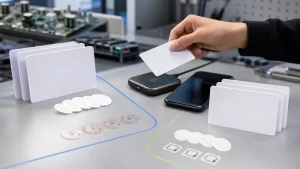
NFC anti-metal tags for metal packaging solve a specific problem: a normal NFC sticker can read well on paper, plastic, or glass, then become weak or unreadable when it is placed directly on aluminum, steel, foil-backed packaging, or a metal product shell. For buyers, the important question is not whether NFC is useful. It is whether the tag construction, placement, adhesive, chip, and encoding plan match the real surface.
If the package is a cosmetic tin, metal bottle, electronics housing, tool case, appliance panel, or foil-laminated gift box, treat the NFC tag as part of the package design and approve samples on the real product before bulk production.

Quick Recommendation
Use standard NFC labels on non-metal surfaces. Use NFC anti-metal tags when the tag is mounted directly on metal or very close to a conductive layer. The anti-metal layer helps isolate the NFC antenna from the metal surface, but it does not remove every placement issue. Phone model, antenna size, tag orientation, surface curve, adhesive thickness, and surrounding materials still affect the tap experience.
| Buyer situation | Practical tag direction | What to test before ordering |
|---|---|---|
| Paperboard box or plastic package | Standard NFC label or sticker | Tap location, chip memory, artwork, adhesive, encoding |
| Aluminum tin, metal cap, appliance shell | NFC anti-metal tag | Ferrite backing, tag size, placement, phone-read consistency |
| Foil-backed packaging or metallic coating | Sample both standard and anti-metal options | Whether the conductive layer is close enough to detune the tag |
| Curved metal container | Flexible anti-metal NFC sticker | Edge lift, adhesive hold, read angle, visual fit |
| Product authentication or warranty tap | Serialized NFC anti-metal tag when needed | URL/data model, locking, scan workflow, backend requirements |
NFC anti-metal tags are 13.56 MHz NFC tags designed for on-metal use. They usually combine an NFC chip and antenna with an anti-metal backing layer, often described as ferrite or shielding material, between the antenna and the metal surface. ASIARFID’s NFC anti-metal tags page describes them as tags designed for metal applications where nearby metal can break or weaken the contactless signal. In practice, the buyer should decide from the mounting surface, scan device, data requirement, and handling conditions.
Why Normal NFC Stickers Fail on Metal
NFC works through near-field electromagnetic coupling between the phone or reader and the tag antenna. Metal near the antenna can absorb energy, reflect the field, or detune the antenna. The result may be no scan, a very short tap distance, or inconsistent reads that only work at a perfect angle.
This is why a normal NFC sticker tested on a desk is not enough evidence for a metal-packaging order. The same sticker may behave differently on a tin lid, curved aluminum tube, stainless equipment panel, or foil-laminated box. If the tag has to sit directly on metal, an anti-metal construction should be part of the sample plan.
Start with the surface, not the chip
List the exact surface first: aluminum, tinplate, stainless steel, painted metal, foil paper, metallic film, coated cardboard, plastic over metal, glass with a metal cap, or another structure. A metal layer behind a decorative label can still affect the NFC antenna even when the visible surface looks like paper.
For mixed packaging, send photos and material notes before asking for a tag recommendation. A supplier can suggest standard NFC tags and labels, anti-metal NFC stickers, or a custom inlay approach only after the surface is clear.
Match size to tap behavior
Small NFC stickers are attractive on premium packaging, but smaller antennas can give less margin when the phone position varies. A larger tag may read more comfortably, while a smaller tag may need a more obvious tap zone and tighter placement control. If the packaging design is tight, test two or three sizes rather than approving the smallest option by appearance only.
Decide the chip and memory from the use case
Many projects only need a short NDEF URL for product information, warranty registration, menus, or reorder pages. Others need more memory, unique serialization, password protection, or platform-specific encoding. Confirm the data length, phone behavior, locking plan, and whether the software provider requires a specific NFC Forum tag type or record format.
Check adhesive and face material
Metal packaging can be smooth, curved, cold, oily, painted, powder-coated, or handled often. Adhesive failure is just as damaging as scan failure. Ask whether the tag will be applied before or after filling, whether the package is exposed to condensation, and whether the face material must support full-color printing, a hidden inlay look, matte finish, or another decorative layer.
Sample Testing Checklist Before Bulk Orders
Apply real samples to real packaging. Test with the same phones, reader app, tap location, and handling conditions expected after launch.
- Test the tag on the exact package material, not only on a flat steel plate.
- Try the intended placement, plus one or two backup positions.
- Check several phone models if the end user will be the public.
- Tap from normal user angles, not only from a lab-perfect position.
- Test after printing, lamination, coating, filling, or assembly if those steps are part of production.
- Record whether the tag opens the right URL or data record every time.
- Confirm the tag still reads after the package is handled, stacked, shipped, or chilled if relevant.
- Approve artwork only after the tag size, placement, and tap zone are stable.
Encoding and Artwork Preparation
Encoding should be planned before mass production. A shared URL, unique URL, app deep link, product ID, maintenance record, or warranty registration flow can all require different data handling. If each item needs a unique code, prepare the data file, naming rule, and verification process before production starts.
Artwork also affects the project. A label that hides the tap point may create poor user behavior. For public-facing packaging, consider a clear tap icon or printed instruction in the artwork file after the tag size and location are approved.
Common Mistakes to Avoid
The first mistake is ordering standard NFC stickers for a metal surface because the chip is correct. Chip memory does not solve antenna interference. The second is approving the tag on a sample card, then moving it to a curved metal package at production time. The third is late encoding: if the URL structure, lock setting, or serialization file changes after production, the order can become slow and expensive.
Why Work With ASIARFID
ASIARFID can help buyers compare NFC anti-metal tags, standard NFC labels, RFID stickers, and broader anti-metal RFID tags for metal packaging, product identification, smart labels, and asset-tagging projects. Send the package material, surface photos, planned tag position, artwork, encoding needs, and test goals so the recommendation can be based on the real environment.
FAQ
Can I use a normal NFC sticker on metal packaging?
Usually not if the sticker is mounted directly on metal. It may fail or read only at a very short distance. Test NFC anti-metal tags or another tuned construction on the real package before ordering.
Often yes, because the anti-metal layer adds material behind the antenna. Confirm thickness with the supplier if the label must fit under a decorative layer, on a curved surface, or inside a tight package design.
What chip should I choose for metal packaging?
Choose the chip after confirming the use case. A simple product-information tap may only need a URL. Authentication, warranty, or serialized projects may need more memory, lock settings, or platform-specific encoding.
How should we test phone readability?
Apply samples to the actual package, then test with several phone models, realistic tap angles, final artwork or coating, and the same encoded data planned for production. Record failures before approving bulk production.
Conclusion
NFC anti-metal tags are useful when a digital tap experience must work on metal packaging or metal products. The best order is not defined by chip name alone. It is defined by surface material, tag size, anti-metal backing, adhesive, artwork, encoding, and sample-test results. Before bulk production, send ASIARFID the package details and request samples on the real surface.