
RFID paper wristbands for events are usually chosen for one reason: the event needs a low-profile, disposable credential that can support faster check-in, access control, guest identification, or cashless interaction without asking visitors to carry a card. The risk is that many wristbands look similar in photos, while the real buying decision depends on chip type, reader setup, event duration, closure security, printing, encoding, and how the band will be issued on site.
For a one-day concert, a conference badge replacement, a pool party, or a short-term attraction event, paper or synthetic-paper RFID wristbands can be practical. For a multi-day festival, resort, or reusable membership workflow, another wristband material may be safer. The best order starts with the event operation, not with the cheapest band style.
Quick Recommendation
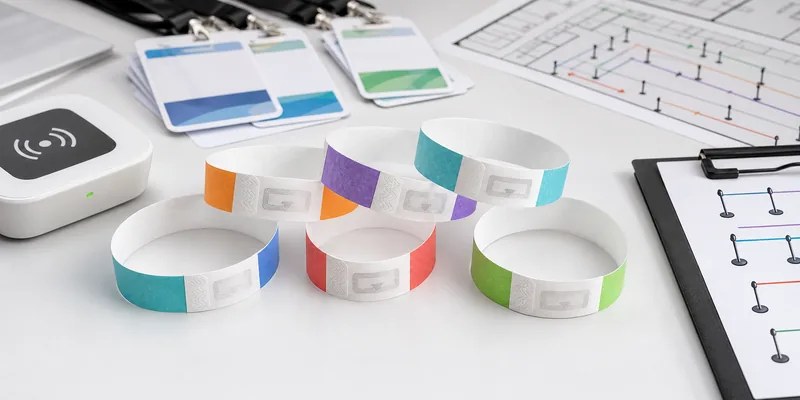
Choose RFID paper wristbands when the event needs a short-term, non-transferable, easy-to-distribute wrist credential. Before bulk production, confirm the reader frequency, chip requirement, encoding data, print artwork, wristband size, adhesive or tamper-control closure, and a sample test on the real gate, POS, kiosk, locker, or access reader.
| Buying Point | What To Check | Why It Affects the Event |
|---|---|---|
| Event duration | Single-day, weekend, repeated-entry, wet venue, or staff use | Paper wristbands fit short-term use better than long-term reusable access. |
| RFID system | LF, HF/NFC, UHF, chip family, reader model, and software workflow | The wristband must match the system that scans, validates, or charges the guest. |
| Closure security | Adhesive closure, tamper evidence, wrist size range, and removal policy | A weak closure can create pass-back or transfer problems at the gate. |
| Printing and numbering | Logo, color zones, serial numbers, UID list, barcode, or blank design | Visual ID still matters when staff need fast manual checks. |
| Sample testing | Gate readers, handhelds, POS terminals, lockers, moisture, and guest movement | Read performance depends on reader power, antenna, wrist orientation, body position, and interference. |
What Are RFID Paper Wristbands?
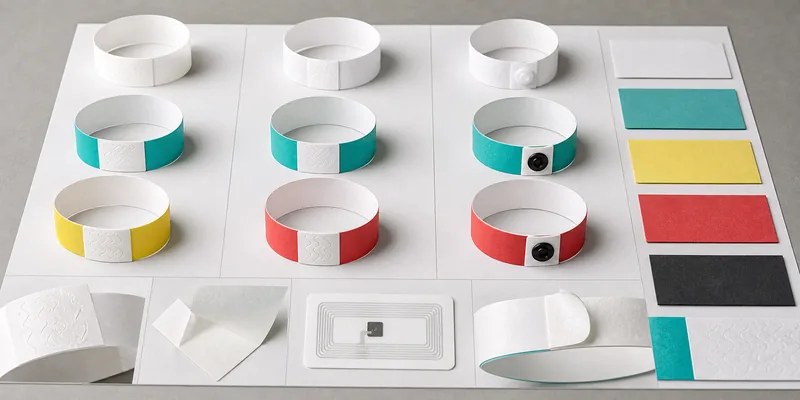
RFID paper wristbands are disposable wrist credentials with an RFID or NFC inlay built into a paper, Tyvek-style, polypropylene, or synthetic-paper band. The band carries a chip and antenna, while the closure helps keep the credential on the visitor’s wrist during the event. Depending on the system, the chip may carry a UID, ticket ID, account link, access permission, or other encoded data.
ASIARFID lists RFID Paper Wristbands inside its wristband product family, including event-oriented paper wristband options and chip examples such as NTAG and MIFARE-style paper wristbands. Buyers should still confirm the exact chip, memory, protocol, and encoding requirement before production, because a product family name alone does not prove compatibility with the event platform.
When Paper Wristbands Make Sense
Paper RFID wristbands are strongest when the event is short, high-volume, and operationally simple. Staff can issue bands quickly, guests can wear them without carrying a card, and the event team can combine visual color coding with electronic scanning. This works well for single-day entry, VIP areas, age control, short conferences, brand activations, indoor venues, temporary attractions, and some water-adjacent events where the selected material and adhesive have been tested.
They are less suitable when the band must survive heavy multi-day wear, repeated removal and reissue, harsh outdoor conditions, or long-term membership use. In those cases, buyers should compare RFID Fabric Wristbands, RFID PVC Wristbands, or silicone options in the wider RFID Wristbands category.
How To Choose RFID Paper Wristbands for Events
Start with the scanning workflow
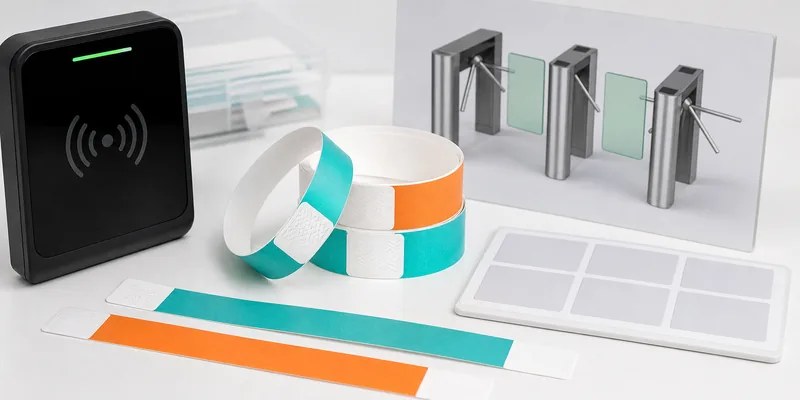
Write down every place the wristband will be scanned: main entrance, VIP gate, backstage door, locker, food and beverage POS, re-entry checkpoint, exhibitor kiosk, or staff area. Each read point may use a different reader type, antenna position, software rule, and scan speed. A wristband that works at a desktop encoder may still need testing at a busy gate where the guest is moving and the operator scans from an angle.
Match chip and frequency to the platform
Event wristbands often use HF/NFC chips for close tap interactions, but some projects use LF or UHF depending on the reader infrastructure and use case. Do not assume an NFC phone-readable chip will work with a ticketing gate, and do not assume a gate credential will work with a cashless POS system. Ask the platform provider which chip family, protocol, memory, UID format, and encoding method are required.
Choose material around wear time and environment
Paper and synthetic-paper wristbands can be light, economical, and easy to distribute. The tradeoff is durability. Sweat, rain, pool areas, heat, friction, and repeated tightening can affect the band and closure. If guests will wear the credential for several days, compare paper samples against fabric, PVC, or silicone before choosing. If the event is short and the band is mainly used for access, paper may be the better cost-and-speed choice.
Decide how much visual control is needed
RFID does not remove the need for visible event control. Color zones, staff markings, VIP colors, age-control bands, serial numbers, and simple artwork help security teams make fast decisions before scanning. Keep the printed design clean. If the wristband also carries a barcode, QR code, serial number, or UID mapping, confirm how that data will be generated, printed, checked, and reconciled with the ticketing database.
Plan encoding before artwork approval
Some buyers need blank wristbands and encode them on site. Others need a UID list, sequential numbering, pre-linked ticket IDs, or batch packaging by access level. These choices affect production files and quality control. If the event platform owns the encoding rules, get its specification before placing the order. Changing data after wristbands are printed can be expensive or impossible.
Common Event Uses
Entry control: Guests tap or scan the wristband at the gate. The system checks whether the credential is valid for that entry point and time.
VIP and zone access: Wristbands can separate general admission, backstage, staff, exhibitor, press, or VIP permissions. The visual design and RFID data should match the same access logic.
Cashless payment: In many event systems, the wristband does not store money by itself. It identifies the visitor or account in the payment platform. Buyers should confirm account linking, refund rules, lost-band handling, and POS reader compatibility before ordering.
Attendee tracking and check-in: Conferences, exhibitions, and attractions may use wristbands to confirm attendance, session entry, or activity participation. Privacy, consent, and data-retention rules should be handled by the event system and organizer.
Short-term hospitality access: Hotels, beach clubs, pools, and resorts may use disposable bands for day guests or temporary zones. For longer guest stays, compare paper with Customized RFID Wristbands or reusable materials.
What To Prepare Before Requesting a Quote
- Event type, venue, date, expected wear time, and indoor/outdoor conditions.
- Reader model, frequency, software platform, chip requirement, and encoding format if known.
- Required use cases: entry, re-entry, VIP zones, payment, lockers, staff access, or attendee tracking.
- Wristband material preference, size, closure type, color zones, and tamper-control requirement.
- Artwork, logo, variable numbering, UID list, barcode or QR requirement, and packaging sequence.
- Sample test plan covering the real reader, wrist orientation, wet hands, gate speed, and edge cases such as lost or replaced bands.
Where ASIARFID Fits
ASIARFID’s wristband product range gives buyers a way to compare paper, fabric, PVC, silicone, and customized RFID wristband options before committing to a material. For a short event, start with RFID Paper Wristbands. If the event involves several days of wear, water exposure, higher perceived value, or reusable access, compare the broader RFID Wristbands category and request samples.
The most useful inquiry is specific: send the platform requirement, reader model, chip or frequency requirement, artwork, quantity estimate, and how the wristband will be issued. If compatibility is uncertain, test samples with the actual scanner and event software before approving bulk production.
FAQ
Are RFID paper wristbands waterproof?
Some paper or synthetic-paper wristbands are designed for moisture resistance, but buyers should not treat waterproofing as a universal feature. Test the exact material and adhesive closure in the expected event environment before ordering.
Can RFID paper wristbands be used for cashless payment?
Yes, when the chip, encoding, POS readers, and event payment platform are designed for that workflow. The wristband usually identifies an account or ticket record; the platform handles balance, transaction, refund, and lost-band rules.
Which chip should I choose for an event wristband?
Choose the chip specified by the event access, ticketing, or payment system. HF/NFC chips are common for close tap interactions, but the final choice depends on the reader, software, memory, UID handling, and security requirement.
Are paper RFID wristbands better than fabric wristbands?
They are better for short-term, disposable, cost-sensitive use. Fabric wristbands usually fit multi-day events, higher-value attendee experiences, and stronger durability requirements. The right choice depends on wear time, environment, closure security, and brand expectations.
Can the wristbands be printed with event branding?
Custom printing is commonly requested for event wristbands. Buyers should provide artwork, color requirements, numbering rules, and any data-matching requirement early so the RFID and visual credential plan can be checked together.
What should I test before approving bulk production?
Test the sample on the real reader, gate, POS terminal, locker, or handheld device. Check read speed, wrist orientation, adhesive closure, guest comfort, moisture exposure, printed appearance, and how lost or replacement wristbands will be handled.
Facts and Assumptions To Verify
- Confirmed from ASIARFID site structure: relevant internal pages include RFID Paper Wristbands, RFID Wristbands, Customized RFID Wristbands, RFID Fabric Wristbands, and RFID PVC Wristbands.
- Assumption: the target reader is an event organizer, ticketing integrator, venue operator, resort buyer, distributor, or access-control project team comparing disposable event credentials.
- Verify before production: exact chip model, frequency, memory, UID or encoding rules, platform compatibility, material durability, adhesive closure behavior, print file, packing sequence, and sample test result.
Conclusion
RFID paper wristbands are a practical choice when an event needs short-term wearable credentials with quick issuing, visual control, and electronic scanning. They are not selected by appearance alone. The buyer needs to confirm the reader system, chip, encoding, closure, event duration, and sample performance before mass production.
To prepare an ASIARFID quote, send your event workflow, reader or platform requirement, artwork, quantity estimate, and whether the wristbands need blank supply, numbering, or pre-encoding. That gives the supplier enough context to recommend a paper RFID wristband sample for real event testing.