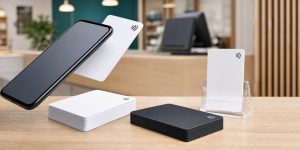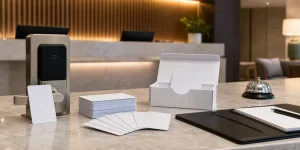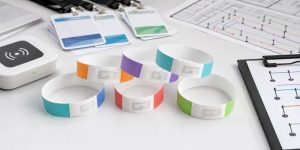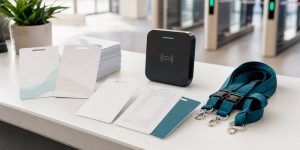
RFID membership cards are used when a member credential needs to do more than show a printed name or number. Gyms, clubs, loyalty programs, schools, coworking spaces, resorts, and associations use RFID or NFC cards for access control, check-in, member identification, rewards, or short-range mobile engagement.
A successful bulk order is not only a card-printing job. It depends on the chip and frequency, the reader or lock system, printed artwork, variable member data, encoding rules, and sample testing. If those details are unclear, a good-looking card can still fail at the gate, front desk, kiosk, or phone tap point.
Quick Recommendation
Start from the system that will read the card. If the card opens doors or turnstiles, confirm the access-control reader and accepted credential type before approving artwork. If the card is mainly for loyalty, check-in, or phone interaction, HF/NFC options may be more practical. If longer-range identification is required, UHF cards may be considered, but the read zone must be tested because performance depends on reader power, antenna, card orientation, nearby people, and surrounding materials.
| Buyer Decision | Good Starting Point | What To Confirm Before Bulk Order |
|---|---|---|
| Gym or club access | LF 125 kHz or HF 13.56 MHz card | Reader model, chip type, ID format, door software |
| Loyalty or check-in | HF/NFC or printed RFID card | POS/check-in terminal, member ID mapping, barcode or QR backup |
| Phone tap interaction | NFC card | Target URL, NDEF encoding, phone test, lock/unlock policy |
| Long-range reads | UHF RFID card | Antenna layout, read zone, card orientation, interference |
| VIP card program | Printed PVC or specialty finish card | Artwork proof, finish sample, personalization, packaging |
What Are RFID Membership Cards?
RFID membership cards are contactless cards with an embedded RFID or NFC chip and antenna. The visible card may look like a normal PVC membership card, but the chip allows a compatible reader to identify the card without swiping a magnetic stripe or manually scanning a printed code.
The card can carry or reference a unique member ID, access credential, loyalty account, event permission, stored URL, or other encoded identifier. The buyer or system integrator should define how that value maps to a member account, access level, renewal cycle, or location.
How RFID Membership Cards Work
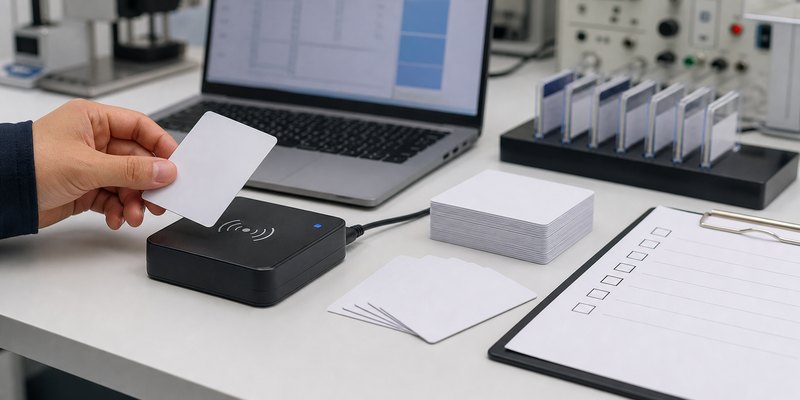
When a card enters a reader field, the reader communicates with the chip through radio frequency signals. It receives the card identifier or stored data and sends it to the access-control, membership, POS, or check-in system.
Frequency matters. ASIARFID’s RFID card product page groups RFID cards by 125 kHz LF, 13.56 MHz HF, and 860-960 MHz UHF card options. Its 13.56 MHz card page also references ISO14443 and ISO15693 options for HF card projects. Two cards can look identical but use different chips, memory structures, UID behavior, security features, or encoding formats, so do not choose from the product name alone.
How To Choose The Right Card
Start With The Reader Or System
Ask the system provider which credential type the reader accepts. A gym turnstile, hotel lock, library kiosk, POS terminal, and smartphone NFC tap do not all read the same cards. If the project replaces an old membership card, send the known card type or reader requirement before ordering samples.
For new systems, define the scan behavior first. Does the member tap at a desk, open a door, check in at a kiosk, tap a phone, or move through a gate without stopping? The answer affects frequency, antenna design, card durability, and encoding.
Confirm Chip, Frequency, And Data Format
Confirm chip family, frequency, protocol, memory needs, and whether the card must be read-only, rewritable, locked, password-protected, or encoded with a specific data structure. Many membership cards only need a unique ID because member data lives in the software. Other programs need encoded numbers, sectors, NDEF URLs, QR backup, barcode printing, or matched member records.
If security is important, do not treat a printed member number as the security layer. Review credential management, lost-card replacement, and permission revocation with the access-control platform provider.
Plan Printing And Personalization Together
RFID membership cards may need full-color printing, member names, member numbers, tier labels, barcodes, QR codes, photos, signature panels, magnetic stripes, slots, or special finishes. These details affect proof approval, data preparation, card sorting, and quality inspection.
Before production, prepare artwork files, color expectations, personalization fields, and a clean spreadsheet for variable data. If each card needs a unique printed number and a matching encoded ID, define whether those values should be identical, sequential, randomized, or mapped from an existing database.
Test Samples In The Real Workflow
Sample testing should copy the operating environment. A card that reads well on an office desk may behave differently at a metal turnstile, behind a reception counter, near a payment terminal, or inside a member’s wallet.
For UHF cards, read performance depends on reader power, antenna placement, tag orientation, body shielding, nearby cards, surface material, and interference. For NFC cards, test the phone models and operating systems that members are likely to use. For door-access projects, test the actual reader and software, not only a separate desktop reader.
Common Applications
RFID membership cards fit several B2B workflows: gym check-in and locker access, private club tier management, retail loyalty identification, campus room and library access, coworking-space entry, resort membership status, and event or attraction permission checks. The right card format changes by workflow. A short-term loyalty card, a daily gym access card, and a multi-location campus credential should not be specified with the same assumptions.
What To Prepare Before Requesting A Quote
Prepare these details before asking for pricing or samples:
- Application: gym, club, loyalty, campus, resort, coworking, event, or another membership workflow.
- Reader or system requirement: frequency, chip type, protocol, known compatible card, or current reader model.
- Card format: standard PVC card, blank card, printed card, specialty finish, slot, magnetic stripe, barcode, QR code, or photo card.
- Encoding: UID use, custom number, NDEF URL, access-control data, member ID mapping, lock policy, or encrypted sector requirement.
- Artwork and data: design files, logo position, color reference, personalization fields, spreadsheet columns, numbering rules, and sorting needs.
- Sample test plan: reader location, tap distance, wallet use, phone tap behavior, gate speed, and environmental concerns.
Why Work With ASIARFID
ASIARFID supplies RFID cards for LF, HF, and UHF card projects, including 125 kHz RFID cards, 13.56 MHz RFID/NFC cards, 860-960 MHz UHF cards, and RFID blank cards. For tap-to-link membership campaigns, ASIARFID’s Google Review Cards page is also a useful reference.
For membership-card orders, send your application, reader requirement, artwork, data format, quantity, and sample test scenario. ASIARFID can help narrow the card option before bulk production instead of forcing the buyer to choose from a generic card list.
FAQ
Are RFID membership cards the same as NFC membership cards?
NFC membership cards are HF 13.56 MHz contactless cards intended for near-field interaction, often including smartphone tap use. RFID membership cards is broader and can include LF, HF/NFC, or UHF cards.
Which RFID card frequency is best for gym membership cards?
It depends on the gym’s access-control reader and check-in system. Confirm the reader requirement or test a known working card before ordering samples.
Can membership cards be printed with member names and encoded IDs?
Yes, but the data format must be prepared before production. Provide the member spreadsheet, printed fields, encoded value rules, and any barcode or QR requirements.
How far can RFID membership cards be read?
Read distance depends on frequency, reader power, antenna design, card orientation, nearby cards, body shielding, surface material, and interference. Test with the exact reader and use case.
Should a membership card store personal information?
Often, it is better for the card to carry a unique identifier while personal member data stays in the buyer’s software. If the card must store sensitive data, review chip security and replacement policy with the system provider.
What should I send ASIARFID for a sample request?
Send the application, reader or system information, card material, artwork, chip or frequency requirement, encoding data, personalization fields, target quantity, and test conditions.
Conclusion
RFID membership cards should be ordered from the workflow backward: reader first, card technology second, artwork and encoding third, and bulk production only after sample testing. A useful RFQ includes the system, frequency, chip, print requirements, encoded data, member-data mapping, and test environment.
If you are preparing a gym, club, loyalty, campus, or resort membership-card project, use the sample stage to confirm both appearance and function before committing to a full batch.