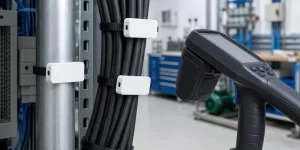
UHF flexible anti-metal tags vs hard anti-metal tags is a real sourcing decision for any project that needs RFID on metal. A normal RFID label can lose performance when it is mounted on a steel cabinet, tool case, pipe, pallet cage, vehicle part, or machine housing. Anti-metal RFID tags are built to reduce that problem, but the format still has to match the asset.
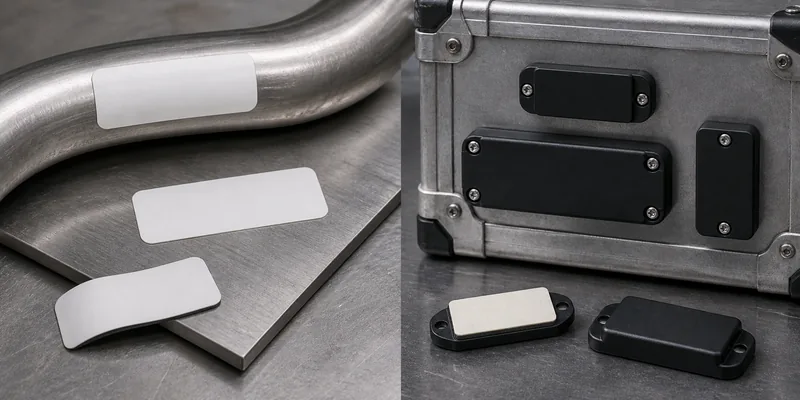
For many buyers, the decision comes down to two paths. A flexible anti-metal label is thin, adhesive, printable, and easier to apply to curved or uneven metal. A hard anti-metal tag is thicker, more rugged, and better when the asset will be used for years or exposed to impact, vibration, outdoor handling, or mechanical mounting.
Quick Recommendation
| Buying Question | Choose UHF Flexible Anti-Metal Tags | Choose Hard Anti-Metal Tags |
|---|---|---|
| Surface shape | Curved, slightly uneven, cylindrical, or limited-height metal surfaces | Flat metal surfaces with room for a thicker housing |
| Installation | Adhesive application, batch printing, serialized labels | Screws, rivets, epoxy, cable ties, or strong adhesive mounting |
| Lifecycle | Medium-term asset labels, large-volume rollouts, metal inventory checks | Long-term equipment, pallets, containers, tools, outdoor or high-impact assets |
| Handling risk | Lower abrasion and impact risk | Frequent handling, vibration, outdoor use, cleaning, or collision risk |
| Visual data | Good when printing, numbering, barcode, or QR code must be produced in batches | Good when visible ID is secondary to physical durability |
What Makes an RFID Tag Work on Metal?
Metal changes how RFID antennas behave. That is why a standard RFID sticker that reads well on a carton may fail after it is attached to a metal shelf or steel tool case. An anti-metal RFID tag adds a structure between the RFID antenna and the metal surface so the tag can work in that environment.
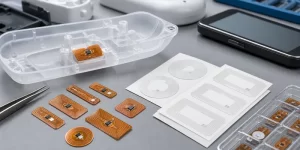
ASIARFID’s anti-metal tag range includes NFC anti-metal tags, UHF flexible metal tags, PCB anti-metal tags, ABS anti-metal tags, and ceramic RFID tags. The right choice should come from the application environment and budget, not from the category name alone. A tag for a painted metal laptop, a returnable steel pallet, and a tool used in a maintenance shop should not be specified the same way.
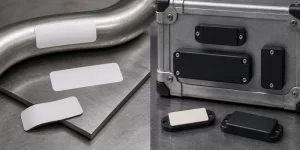
UHF flexible anti-metal tags are made for buyers who need on-metal RFID performance in a lower-profile format. ASIARFID describes these tags as flexible and bendable, which makes them useful on irregular or uneven metal surfaces such as steel boilers, metal containers, and steel pipes.
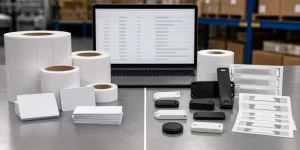
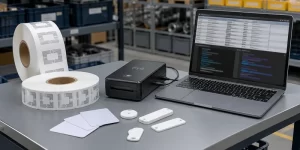
The practical advantage is installation speed. Flexible tags can often be applied with adhesive, supplied in batches, printed with visible numbers, and encoded for inventory systems. They fit projects where hundreds or thousands of metal assets need a readable identity, but a bulky hard tag would be slow to mount or too tall for the asset surface.
Typical use cases include metal device supply-chain tracking, hospital equipment, cylinders, logistics containers, IT assets, metal shelves, cabinets, and asset-management labels. Flexible tags are also useful when the buyer needs a larger printable face for a serial number, barcode, department code, or QR backup.
The limitation is physical protection. A flexible label can still be damaged by abrasion, edge picking, aggressive cleaning, impact, or poor adhesive selection. If forklifts, outdoor storage, repeated washing, heavy vibration, or years of rough handling are expected, a hard tag may be safer.
Hard anti-metal tags use a more rigid body, often ABS, PCB, ceramic, or another engineered structure. ASIARFID’s ABS anti-metal tags use industrial ABS plastic with metal shielding material and are positioned for asset management, logistics management, power grid inspection, railway inspection, and other industrial applications.
Hard tags are the better starting point when the asset is valuable, reusable, exposed, or expected to stay tagged for a long time. Pallets, returnable containers, electrical boxes, vehicles, outdoor metal facilities, heavy tools, warehouse racks, and industrial equipment usually need more than a thin label. The tag may need screws, rivets, epoxy, cable ties, or a prepared mounting point.
The tradeoff is size and installation work. A hard tag takes more space. It may cost more per item. It may require drilling, fixture planning, or a stronger mounting process. That cost can still make sense when lost assets, missed reads, or tag replacement would be more expensive over the asset life.
How to Choose Between Them
1. Start With the Metal Surface
Flat, clean, protected metal can support many tag options. Curved pipes, cylinders, painted housings, textured containers, and narrow rails are harder. Flexible anti-metal tags often fit better when the surface is curved or slightly uneven. Hard tags usually fit better when the asset has a flat prepared mounting area.
2. Define the Read Workflow
Do not choose from claimed maximum read distance alone. UHF read performance depends on reader power, antenna gain, tag orientation, metal size, mounting position, nearby liquids, nearby tags, and the worksite layout. A handheld audit in a maintenance room is different from a fixed portal at a warehouse gate.
3. Match the Tag to the Lifecycle
If the tag only needs to support inventory checks during a project or over a moderate service period, flexible labels can be efficient. If the asset will circulate for years, face repeated impact, or remain outdoors, hard tags usually deserve the first sample test.
4. Plan Mounting Before Artwork
Artwork is easier to adjust than a failed mounting plan. Decide whether the tag will be adhesive-backed, screwed, riveted, tied, embedded, or glued. Then confirm the tag size, readable orientation, printed ID position, and whether staff can install it consistently.
5. Test Samples on the Real Asset
Sample testing should include the actual reader, antenna, metal surface, tag position, scan distance, asset angle, cleaning method, and handling process. A tag that reads on one steel plate may not read the same way on a curved pipe, painted cabinet, or stacked metal container.
What to Prepare Before Ordering
Before asking for a quotation, prepare photos of the asset, material notes, mounting position, expected quantity, reader model, scan workflow, encoding data, and durability concerns. If the project includes both flat metal cabinets and cylindrical assets, ask for more than one sample type. One anti-metal tag rarely solves every metal surface in a mixed site.
For broader options, review ASIARFID’s RFID tags and anti-metal product family, including PCB anti-metal tags, ABS tags, flexible tags, and ceramic tags. The strongest procurement process is not choosing a favorite shape first. It is testing the tag that fits the asset, workflow, and installation method.
Why Work With ASIARFID
ASIARFID supports custom RFID tags for metal and non-metal environments, including flexible anti-metal tags, ABS anti-metal tags, PCB tags, ceramic tags, RFID stickers, and broader RFID tag formats. For metal-asset projects, the useful support is matching the tag to the real asset surface, reader setup, printing requirement, encoding plan, and sample-test result before bulk production.
Send your asset photos, reader details, expected read point, quantity, artwork, encoding rules, and mounting constraints to compare UHF flexible anti-metal tags with hard anti-metal RFID tags for your project.
FAQ
They are not automatically weaker in RF performance, but they usually offer less physical protection. A flexible tag can be the better choice for curved metal and batch labeling, while a hard tag is usually safer for harsh handling.
Yes, flexible anti-metal tags are often selected when buyers need visible printing, numbering, barcode, QR code, or batch encoding. The exact print and encoding workflow should be confirmed before production.
Which tag is better for metal pallets or containers?
Hard anti-metal tags are often a strong starting point for reusable pallets and containers because the tag may face impact, vibration, outdoor handling, and long service life. Flexible tags may fit when the surface is curved or when low-profile labeling is more important.
No. Read range depends on reader power, antenna setup, tag size, metal surface, orientation, mounting method, and site interference. Test samples in the real workflow before bulk ordering.
What information should I send to ASIARFID?
Send asset photos, metal type, mounting position, reader model, required scan distance, quantity, print artwork, encoding format, and whether the tag must resist impact, cleaning, outdoor use, or vibration.
Contact ASIARFID to request samples and compare flexible or hard anti-metal RFID tag options for your metal asset tracking project.